
The Candidate You Keep Passing Over
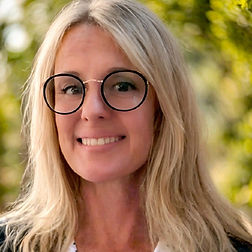
Let me tell you what I did today.
I spotted three collaboration opportunities that had been sitting in plain sight — unnoticed — by a room full of smart, capable people. I traced how a single community relationship could simultaneously generate revenue, deepen attendance, unlock grant funding, and turn everyday visitors into vocal advocates. I identified a whole underserved audience hiding in your own visitor data, waiting for someone to ask the right question.
I did all of that because of my ADHD brain, not in spite of it.
But if you'd put me in a 45-minute interview and asked me to summarize my strengths? You'd have gotten a fraction of that. Because that's not how I think. I don't think in bullet points or career timelines. I think in webs. I think in what if and who else and have you looked at it this way?
And the research backs this up.
What an ADHD Brain Actually Does
A 2022 study published in Frontiers in Psychiatry examined creativity across a large population sample and found that higher rates of ADHD symptoms were significantly associated with higher divergent thinking scores — including fluency, flexibility, and originality — but not with convergent thinking. In other words, the ADHD brain isn't generating more of the same ideas. It's generating different ideas, from different angles, that other brains miss.
The researchers also found something worth sitting with: the inattention symptom domain — being easily distracted, mind-wandering — was the primary driver of original thinking. The very thing that gets flagged on a performance review is the engine of creative output.
I'll say that again: the thing you're penalizing is the thing you need.
The Interview Problem
Here's what the hiring process is actually measuring: your ability to perform clarity under pressure about things that are, by nature, hard to articulate.
For neurodivergent candidates, that's a structural barrier, not a capability gap. Research consistently identifies ineffective recruitment and interview practices as one of the documented barriers to employment for neurodivergent individuals — right alongside sensory difficulties, lack of accommodations, and the emotional toll of masking.
And masking is the word I want you to hear. Masking refers to how neurodivergent individuals hide their natural characteristics to adapt to neurotypical norms — often unconsciously, always exhaustingly. When you put a neurodivergent candidate in a traditional interview, you're not seeing their best work. You're seeing their best performance of someone else's version of professionalism.
The question isn't whether I can answer "tell me about a time you demonstrated leadership." The question is whether that question tells you anything useful about what I can actually do.
It doesn't.
Here's what does: Ask me a specific problem. Ask me how you'd make more money, build deeper community trust, or reach an audience you've been missing. Ask me to look at your data and tell you what I see.
Watch what happens.
The Audience You're Missing
There's a business case hiding in plain sight here, too.
The neurodivergent community is large, loyal, undercapitalized by most institutions, and tired of being an afterthought. Employment rates for neurodivergent workers have increased over time but remain significantly below the general population — and that gap represents not just a talent pipeline problem, but an audience engagement problem for mission-driven organizations.
Think about what happened when institutions leaned into LGBTQIA+ inclusion — authentically, not performatively. They didn't just do good. They accessed a community that shows up, spends money, tells their friends, and evangelizes the organizations that see them. I saw this firsthand when I helped resurrect a failing adults-only event at my institution by doing something simple: asking the people closest to the community to lead it. We intentionally engaged LGBTQIA+ staff and allies in the design, moved the event to July — because that community is exhausted by the end of Pride month and hungry for something that feels like it's actually for them, not just marketed at them — and in the process, re-engaged staff who had previously reported feeling invisible. The event came back to life. So did they.
The neurodivergent community works the same way. Nearly everyone either identifies or loves someone who does. The potential for authentic engagement — in revenue, attendance, advocacy, and grant funding — is enormous. And most organizations are leaving it entirely on the table.
Your neurodivergent employees already see this opportunity. They're probably not being asked.
What You Actually Get
When you hire someone like me — and figure out how to let them work the way they actually work — you're not just doing the right thing. You're getting:
A pattern recognizer who sees what the room missed
A systems thinker who understands how community engagement translates to multiple bottom lines simultaneously
An empathetic leader who makes people feel seen — which is, it turns out, one of the highest-value things a human being can do in a mission-driven organization
Someone who will not burn out quietly and become a liability; someone who has learned, often the hard way, how to sustain themselves
Research increasingly underscores the unique competencies neurodivergent individuals bring to the workplace: enhanced pattern recognition, attention to detail, and innovative problem-solving — and yet, stigma remains a major barrier to gainful employment, even as employers and employees alike recognize the positive qualities neurodivergent people bring to work.
That's the gap. You know the value is there. The system keeps filtering it out.
The System Is Broken
I want to be clear: I'm not asking for your sympathy. I am truly thriving in every area of my life. I'm asking for your attention — because this is costing you.
Companies like SAP, Microsoft, and EY have become exemplars, demonstrating how neurodiversity hiring can benefit both employees and employers — not through charity, but through deliberately designing processes that let neurodivergent talent show what they can actually do.
That's the ask. Not a special program. Not a checkbox. A different set of questions.
Stop asking me to summarize myself in 45 minutes. Start asking me to solve something real.
I will make you more money, build deeper community trust, and serve as a role model for every other neurodivergent person on your team who has been quietly doing the same work while waiting for someone to notice.
The system that's filtering me out is the same system that built the problems you're trying to solve.
Maybe it's time to ask different questions.


Comments