
What Happens Once the Door is Open? Shifting from Access to Belonging in Conservation

Over the last few years, zoos and aquariums have made significant strides in becoming more accessible to neurodivergent visitors. ZANE has been instrumental in helping these organizations understand what inclusive practice looks like and in opening doors that were too often closed to neurodivergent individuals. But then what?
I have spent a lot of my career thinking about who gets to feel like they belong in places that weren't always made with them in mind. In 2000, I co-created a program at the Monterey Bay Aquarium for Head Start families who were coming to the Aquarium for the first time. The children spoke primarily Spanish at home, and many of their parents were navigating a new country and culture, along with an English-speaking school system. We wanted families to feel comfortable at the Aquarium and for young children to have an opportunity to learn and explore the ocean at an early age.
As the program evolved, I began to realize that language was not all of it. The Head Start program also served children with different learning and developmental needs. Their families, who are often forgotten in our education programs, were also just beginning to understand how their children learned, communicated, and experienced the world. If our goal was for ALL children and their families to develop a connection to the ocean, we needed to think differently about how we were meeting the needs of the people in front of us.
The Head Start teachers were essential partners in that learning. With their help, we designed activities that allowed children to move at their own pace. They could touch, feel, move, observe, and simply be in the beautiful exhibits. We also created meaningful roles for parents to guide their children through the experience. We learned that parents often know their children best and they know exactly what works. Sometimes they just need a little help or encouragement. Try this. Try that. See what happens. All of the adults involved—the parents, teachers, and aquarium educators—were there to provide these children with a magical experience. And we needed each other to make that happen.
Alongside this program, I was also developing a week-long science camp for young women ages 11 to 14. The camp was bilingual and bicultural, in English and Spanish, and many of the things we learned through the Head Start program found their way into the science camp. The two programs informed each other as we continued learning from the young people and families we were working with.
Recruiting for this program required me to reach into our local community, so I also learned more about who lived around us. The gift of that outreach was that it challenged some of what I thought I knew. One of the communities I learned about was a small but mighty group of Fijians. When I thought of “Fijian,” I immediately thought of the Pacific, Polynesia, and a close relationship with the ocean. But I learned that part of the Fijian community in our area included Indo-Fijians who had very different histories and relationships with the sea. Two young women came from this community and had never been in the ocean. I had assumed that because these young women were Fijian and at the time lived less than two miles from the ocean, they knew the ocean. I was wrong.
On the final day of camp, the young women donned their wetsuits and started stepping into the ocean holding hands. Both young women became very distressed about water getting into their wetsuits. Even though I was surprised because I thought, ‘They are Fijians; they know the ocean,’ I also remember thinking, ‘No problem. I've had students like this before.’ Again, I was wrong.
One of the young women was also neurodivergent. For her, entering the ocean required some different calculations than I had not done in the past. The new sensations and stimulation meant we needed to slow down, explain what was happening, read her cues, and give her space to experience the ocean in her own way. Eventually, she found her own way of feeling comfortable in the water. And the two of them spent the day not snorkeling, but playing in the surf in their wetsuits.
What I learned is that we didn't need to make the experience the same for everyone. We needed to make space for each young woman to enter the experience in their way.
Those young women eventually grew up to be people who love the ocean. They did not become marine scientists. They did not become professional conservationists. They developed their own relationships with the ocean. They became their own version of ocean conservationists.
What both of these experiences taught me is something I think is important for all of us working in conservation. We need to stop thinking of people primarily in terms of what they need from us. Instead, we need to remember that everyone has something to contribute to conservation. The question we should be answering is whether we have created enough ways for people to find their own relationship with nature.
I came to the field of conservation out of hope. I wanted to help create a better place for people, animals, and plants. I still believe conservation needs to be a hopeful endeavor. In a world where so much of the news around us is about loss, climate change, extinction, and uncertainty, people need opportunities for connection, hope, and possibility. They need to see themselves included in the future we are asking them to care about.
That is why I don't think accessibility can end with getting someone through the door. We have to ask what happens once the door is open. What are the ways people can participate? What are the different ways someone might connect with an animal, a place, a scientific idea, a community, or a conservation issue? What might make that possible for one person but not another?
There isn't always an easy answer. And maybe that's the point. Our work is to listen to the people and communities we engage with, to learn what we may not see, and to build relationships. From there, we can co-discover and co-create the many pathways into conservation.
The more we listen, the more we realize that people experience the world through many parts of themselves. Neurodivergence is not separate from race, class, culture, language, gender, age, disability, family, or community. These parts of who we are shape the barriers we experience, and also the knowledge, perspectives, relationships, and contributions we bring.
This is where intersectionality becomes useful. It is not a way to categorize people further. It is a way to see more of who a person is and to understand that our different experiences can shape how we move through the world.
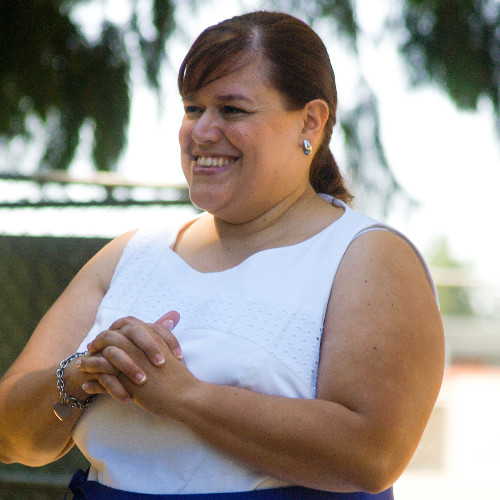
For me, this is personal. I am neurodivergent. I am Latina. I am a woman in my mid-fifties. I am first generation in this country. None of these things tells you everything about me. But together, they have informed how I experience institutions, how I understand belonging, and how I experience the world.
When we create spaces where people can see themselves reflected, something happens for all of us. We start to see ourselves more clearly. We recognize parts of our own experiences in other people. We find ways to bring more of ourselves into the work. And perhaps that is the deeper promise of going beyond opening the door. It is true belonging.
Everyone should have a pathway to becoming an active participant in conservation. Conservation itself needs to be broad enough to have many pathways into it. We don't have to know all of those pathways yet. We can discover them by listening, building relationships, and creating them together.
That is the hope I have for ZANE: to help the field move from accessibility as accommodation toward accessibility as belonging.
Dr. Jenny de la Hoz is an experienced zoo and aquarium learning and DEAI leader and Latina neurodivergent self-advocate. Engage in a conversation with her on intersectionality and neurodiversity by registering for the ZANE webinar "What Happens Once the Door is Open?" here.


Comments